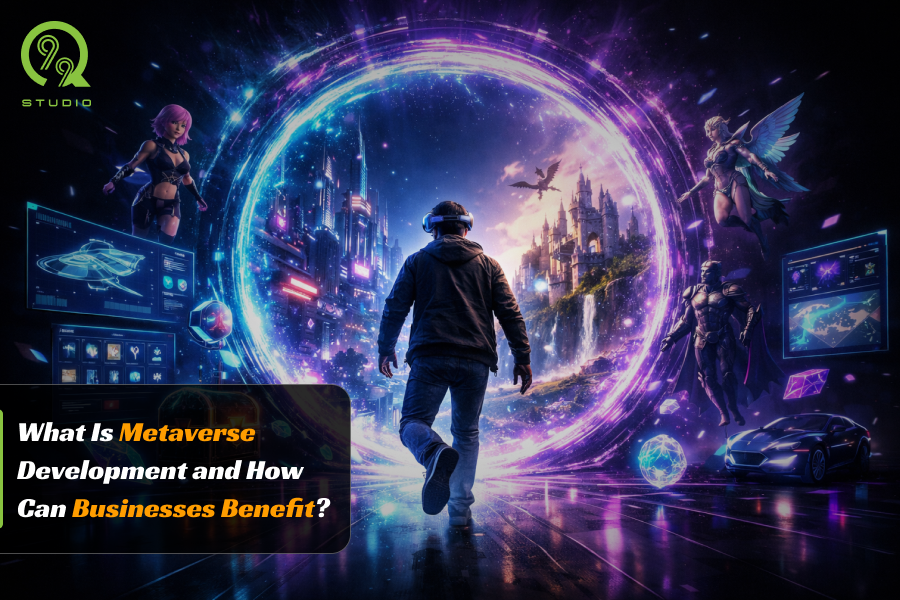
The metaverse is no longer just a futuristic buzzword. It is becoming a practical digital environment where businesses can build immersive customer experiences, virtual workplaces, and new revenue channels.
If you're searching for clear answers, not hype, here’s what metaverse development actually means and how it benefits companies.
What is Metaverse Development?
Metaverse development is the process of designing and building interactive 3D virtual environments where users can engage using digital avatars. These environments are persistent, immersive, and often connected to real-world systems.
It combines technologies such as:
- Virtual Reality (VR)
- Augmented Reality (AR)
- Artificial Intelligence (AI)
- Blockchain
- 3D game engines
The concept gained global visibility when Meta announced its shift toward immersive digital ecosystems. Since then, metaverse development has expanded into enterprise, retail, education, real estate, and manufacturing.
In simple terms, it’s about building virtual spaces where people can interact, work, shop, train, and socialize in real time.
How Does Metaverse Development Work?
Metaverse platforms are built using a combination of hardware and software systems:
- VR and AR devices like Meta Quest enable immersive access.
- Game engines such as Unity and Unreal Engine are used to create realistic 3D environments.
- Blockchain platforms (like Decentraland) enable ownership of digital assets.
- AI systems personalize user interactions and automate virtual behaviors.
Developers build interactive worlds, integrate secure payment systems, design avatars, and ensure cross-platform compatibility.
Why Are Businesses Investing in Metaverse Development?
Companies are entering the metaverse for three main reasons:
1. Deeper Customer Engagement
Immersive experiences increase user interaction time and brand recall compared to traditional websites.
2. New Revenue Models
Businesses can monetize:
- Virtual products
- NFTs
- Digital real estate
- Subscription-based virtual access
- Sponsored events
3. Competitive Positioning
Early adopters gain innovation-driven branding and attract tech-savvy audiences.
Which Industries Are Using Metaverse Development?
Metaverse adoption is growing across multiple sectors.
Gaming
Platforms like Roblox and Fortnite already function as social metaverse ecosystems where users attend events and interact digitally.
Enterprise & Remote Work
Solutions like Microsoft Mesh enable immersive virtual collaboration for distributed teams.
Retail & E-commerce
Brands are launching 3D showrooms and AR try-on experiences to increase conversions and reduce product returns.
Education & Training
Virtual simulations help professionals train in realistic yet risk-free environments, especially in healthcare, aviation, and industry.
What Services Are Included in Metaverse Development?
A typical metaverse development company provides:
- 3D world design and environment creation
- Avatar development
- Blockchain and NFT integration
- Virtual marketplace development
- Digital twin solutions
- AI integration
- Cross-platform deployment
These services can be customized depending on business goals.
How Much Does Metaverse Development Cost?
The cost depends on project complexity, features, and scale.
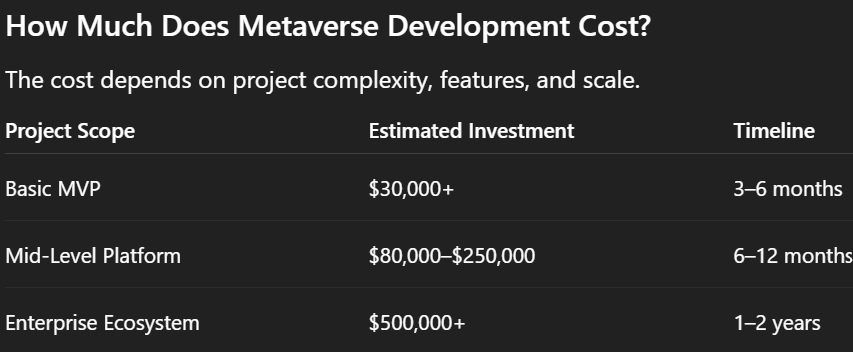
Factors affecting cost include graphics quality, blockchain integration, AI functionality, scalability, and device compatibility.
What Is the Future of Metaverse Development?
The future of metaverse development lies in scalability, interoperability, and real business utility. Instead of isolated virtual platforms, the next phase will focus on interconnected ecosystems where users can move assets and identities seamlessly across digital spaces.
As AR/VR hardware becomes more affordable and 5G/6G networks improve real-time rendering capabilities, immersive platforms will become faster and more accessible. Artificial Intelligence will drive hyper-personalized virtual environments, while blockchain will strengthen digital ownership and decentralized economies.
Enterprise adoption is expected to grow rapidly in:
- Industrial simulation
- Remote collaboration
- Digital twins for manufacturing
- Immersive e-commerce
- Virtual training environments
The metaverse will gradually evolve from experimental marketing campaigns into a long-term digital infrastructure layer for businesses.
Conclusion
Metaverse development is not about replacing the internet it is about enhancing it with immersive, interactive, and economically scalable experiences. Businesses that approach it strategically, focusing on user experience and measurable ROI, will gain a significant competitive advantage.
As industries move toward immersive digital ecosystems, companies need experienced technology partners who understand 3D development, AR/VR integration, blockchain systems, and scalable architecture.
If your organization is planning to build immersive virtual platforms, digital twins, or interactive brand environments, it is essential to hire metaverse developers whose expertise aligns with your long-term innovation roadmap.
Q99 Studio specializes in metaverse development solutions, helping businesses design interactive virtual environments, enterprise-grade digital twins, and immersive brand experiences tailored to future-ready digital strategies.

 B - 433-442, Money Plant High Street, Near Ganesh Glory, Jagatpur Road, S.G. Highway, Ahmedabad - 382470.
 11006 Kirker Ln, Richmond, TX 77407, USA


