The video game industry is one of the fastest-growing digital markets in the world, driven by innovation in game engines, cloud infrastructure, AI, and immersive technologies. For game development companies, understanding which genres dominate player demand is critical to building successful, scalable, and profitable games.
In this guide, we break down the 15 game genres currently shaping the video game industry and explain why they present strong opportunities for studios, startups, and publishers.
Why Choosing the Right Game Genre Matters for Development
Selecting the right genre directly impacts development complexity, monetization potential, time to market, and long-term scalability. Popular genres benefit from proven player demand, established monetization models, and strong community engagement—making them ideal choices for commercial game development.
Below are the genres that consistently perform well across PC, console, and mobile platforms.
- First-Person Shooter (FPS)
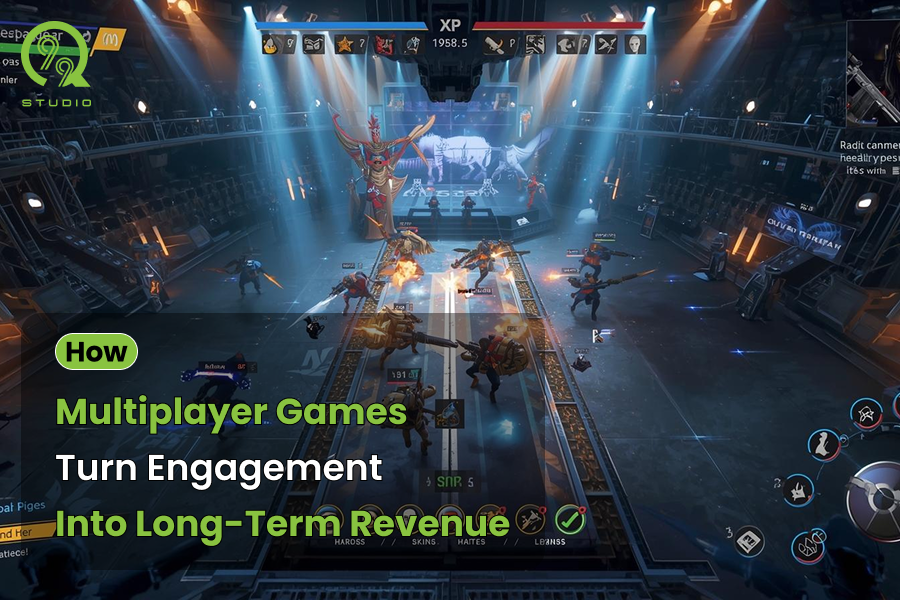
FPS games remain a top choice for competitive and multiplayer-focused projects. With fast-paced mechanics, strong esports potential, and recurring revenue models, FPS titles are ideal for studios targeting long-term engagement.
Development opportunity: Multiplayer architecture, live ops, esports-ready features.
- Action-Adventure Games
Action-adventure games combine storytelling, exploration, and combat into immersive experiences. These titles often achieve strong commercial success due to their broad audience appeal.
Development opportunity: Narrative design, cinematic gameplay, cross-platform releases.
- Role-Playing Games (RPGs)
RPGs are known for deep gameplay systems, character progression, and rich storytelling. They are highly scalable through expansions, DLCs, and live updates.
Development opportunity: Open worlds, progression systems, long-term content pipelines.
- Battle Royale Games
Battle royale games thrive on large-scale multiplayer environments and live-service models. Their popularity makes them ideal for studios experienced in backend scalability and real-time networking.
Development opportunity: Server optimization, matchmaking, live updates.
- Simulation Games
Simulation games offer creative freedom and high replay value. They are particularly successful on PC and mobile platforms.
Development opportunity: System-driven design, sandbox mechanics, mod support.
- Sports Games
Sports games benefit from global fan bases and recurring releases. They are well-suited for studios focused on realism, physics engines, and competitive play.
Development opportunity: Physics simulation, online multiplayer, licensed content.
- Puzzle Games
Puzzle games are cost-effective to develop and perform exceptionally well in the mobile market.
Development opportunity: Mobile-first design, monetization optimization, casual engagement.
- Fighting Games
Fighting games demand precision, balance, and responsive controls. They often build loyal competitive communities.
Development opportunity: Combat systems, animation pipelines, esports features.
- Racing Games
Racing games range from arcade-style to realistic simulators, offering flexibility in development scope.
Development opportunity: Physics engines, vehicle mechanics, multiplayer racing.
- Horror Games
Horror games deliver strong engagement with relatively focused development scope. They are especially popular in indie and VR markets.
Development opportunity: Atmosphere design, VR integration, narrative pacing.
- Open-World Games
Open-world games provide expansive environments and player freedom, often blending multiple genres.
Development opportunity: World-building, AI systems, scalable environments.
- Metroidvania Games
Metroidvania games reward exploration and skill progression, making them popular among dedicated player communities.
Development opportunity: Level design, progression mechanics, 2D/2.5D engines.
- Survival Games
Survival games focus on crafting, resource management, and player-driven stories.
Development opportunity: Sandbox mechanics, multiplayer systems, community-driven gameplay.
- MMORPGs
MMORPGs are complex but highly rewarding when executed well, offering long-term player retention.
Development opportunity: Backend scalability, live content management, social systems.
- Real-Time Strategy (RTS) Games
RTS games appeal to strategy-focused players and competitive communities, particularly on PC.
Development opportunity: AI logic, multiplayer balance, performance optimization.
How a Professional Game Development Company Can Help
Building a successful game in any of these genres requires more than a great idea. It demands technical expertise, design excellence, scalable architecture, and a deep understanding of player behavior.
A professional game development company can support you with:
- End-to-end game design and development
- Cross-platform development (PC, console, mobile)
- Multiplayer and backend infrastructure
- Live ops, monetization, and post-launch support
Final Thoughts
These 15 game genres represent the strongest opportunities in today’s gaming market. By choosing the right genre and partnering with an experienced development team, studios and businesses can create engaging games that scale, monetize, and succeed globally.
Looking to develop a game in one of these trending genres? Partner with a trusted game development company to turn your vision into a market-ready product.


 B - 433-442, Money Plant High Street, Near Ganesh Glory, Jagatpur Road, S.G. Highway, Ahmedabad - 382470.
 11006 Kirker Ln, Richmond, TX 77407, USA


