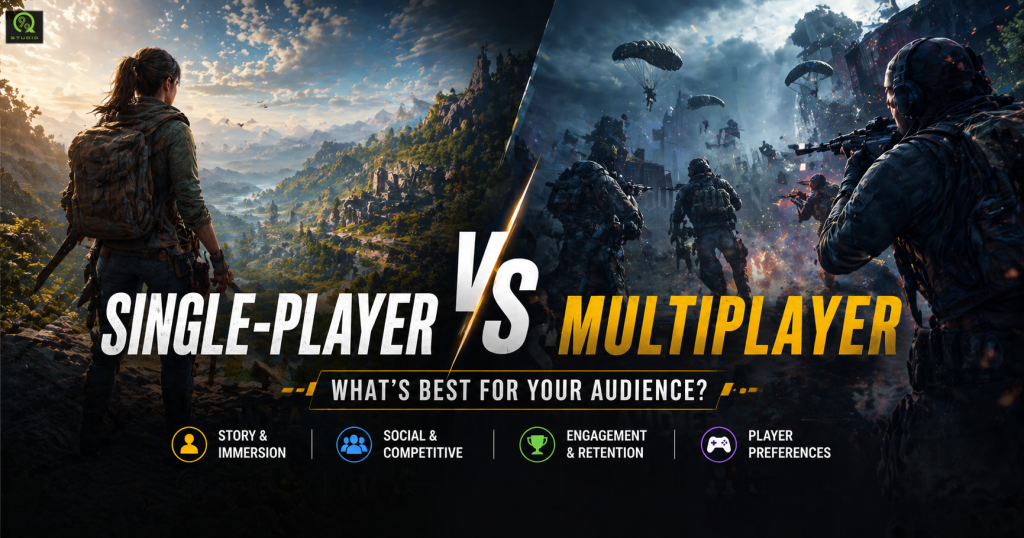
Choosing between single-player and multiplayer game development is one of the most critical decisions for any gaming business in the USA. This choice directly impacts your development cost, user engagement, scalability, and long-term revenue potential.
In this guide, we break down single-player vs multiplayer game development based on cost, features, audience behavior, and monetization so you can confidently choose the right model for your game.
What Are Single-Player Games?
Single-player games are designed for one user at a time. These games focus heavily on storytelling, immersive environments, and character progression without requiring real-time interaction with other players.
Popular examples include story-driven and adventure-based games where users can progress at their own pace.
Key Benefits of Single-Player Games
1. Deep Storytelling & Immersion
Single-player games allow developers to craft rich narratives, emotional story arcs, and highly immersive gameplay experiences.
2. Lower Development Complexity
Since there’s no need for real-time servers or multiplayer synchronization, development is simpler and faster.
3. Reduced Infrastructure Costs
No need for backend systems like matchmaking, servers, or live data syncing making it budget-friendly.
4. Offline Accessibility
Perfect for users who prefer playing without internet connectivity.
When Should You Choose Single-Player Game Development?
Single-player is ideal if:
- Your game is story-driven or narrative-focused
- You’re targeting casual or solo gamers
- You have a limited budget or are a startup
- You want faster time-to-market
What Are Multiplayer Games?
Multiplayer games allow multiple players to interact in real time either competitively or cooperatively. These games are highly engaging and often rely on social interaction, competition, and continuous updates.
Popular formats include battle royale, co-op missions, PvP battles, and real-time strategy games.
Advantages of Multiplayer Game Development
1. High User Retention
Multiplayer games keep users engaged through competition, social interaction, and live events.
2. Strong Viral Growth Potential
Players invite friends, share achievements, and create organic growth loops.
3. Advanced Monetization Opportunities
Multiplayer games generate higher revenue through:
- In-app purchases
- Skins and upgrades
- Battle passes
- Advertisements
4. Scalable Business Model
With the right backend, multiplayer games can scale globally and support millions of users.
When Should You Choose Multiplayer Game Development?
Multiplayer is the right choice if:
- Your game revolves around competition or collaboration
- You want long-term user engagement
- Your business model depends on recurring revenue
- You are targeting Gen Z or competitive gamers
Single Player vs Multiplayer: Key Differences
| Feature | Single-Player Games | Multiplayer Games |
|---|---|---|
| Development Cost | Low to Medium | High |
| Server Requirement | Not Required | Required |
| User Engagement | Moderate | High |
| Monetization Potential | Limited | High |
| Complexity | Medium | High |
| Time to Launch | Faster | Longer |
Game Development Cost Comparison
Single-Player Game Development Cost
In the US market, the cost depends on game complexity, platform, and design.
- Small to mid-level games: $10,000 – $50,000
- Advanced games: Can go higher depending on features
Multiplayer Game Development Cost
Multiplayer games require additional systems like:
- Real-time servers
- Matchmaking systems
- Data synchronization
- Security infrastructure
Estimated Cost:
- $30,000 – $200,000+
This cost varies based on scalability, features, and performance requirements.
Understanding Your Target Audience
Demographics
- Ages 13–25: Prefer multiplayer, competitive, and social games
- Ages 25+: Lean toward story-driven and immersive single-player experiences
User Behavior
- Casual gamers: Prefer quick, single-player sessions
- Hardcore gamers: Prefer competitive multiplayer experiences
Monetization Trends in the USA
- Multiplayer games dominate revenue due to recurring purchases
- Single-player games often rely on premium pricing or ads
Hybrid Model: The Best of Both Worlds
Many successful games today combine both formats.
A hybrid model may include:
- Single-player campaign mode
- Multiplayer co-op or PvP features
Why Hybrid Works:
- Attracts a broader audience
- Increases engagement
- Maximizes monetization opportunities
How to Choose the Right Game Model for Your Business
Before deciding, ask yourself:
- What is my target audience?
- What is my budget?
- Do I want short-term or long-term revenue?
- Is my game idea story-driven or interaction-driven?
If your goal is:
- Fast launch + lower cost → Go Single-Player
- High engagement + recurring revenue → Go Multiplayer
Why Hiring the Right Game Development Company Matters
Choosing the right development partner can define your success.
An experienced team helps you:
- Validate your game idea
- Choose the right architecture
- Optimize development cost
- Build scalable and engaging gameplay
Conclusion: Which One Should You Choose?
Both single-player and multiplayer game development have their own advantages, challenges, and business potential.
Your decision should depend on:
- Your game idea
- Your target audience
- Your budget
- Your long-term vision
Ready to Build Your Game?
If you're planning to launch a high-performance game for the US market, partnering with the right experts makes all the difference.
Q99 Studio is a leading game development company helping businesses turn ideas into scalable, engaging, and revenue-driven games.
Get in touch today to:
- Validate your game idea
- Get a cost estimate
- Hire expert game developers
Let’s turn your game concept into the next big success.


 B - 433-442, Money Plant High Street, Near Ganesh Glory, Jagatpur Road, S.G. Highway, Ahmedabad - 382470.
 11006 Kirker Ln, Richmond, TX 77407, USA


