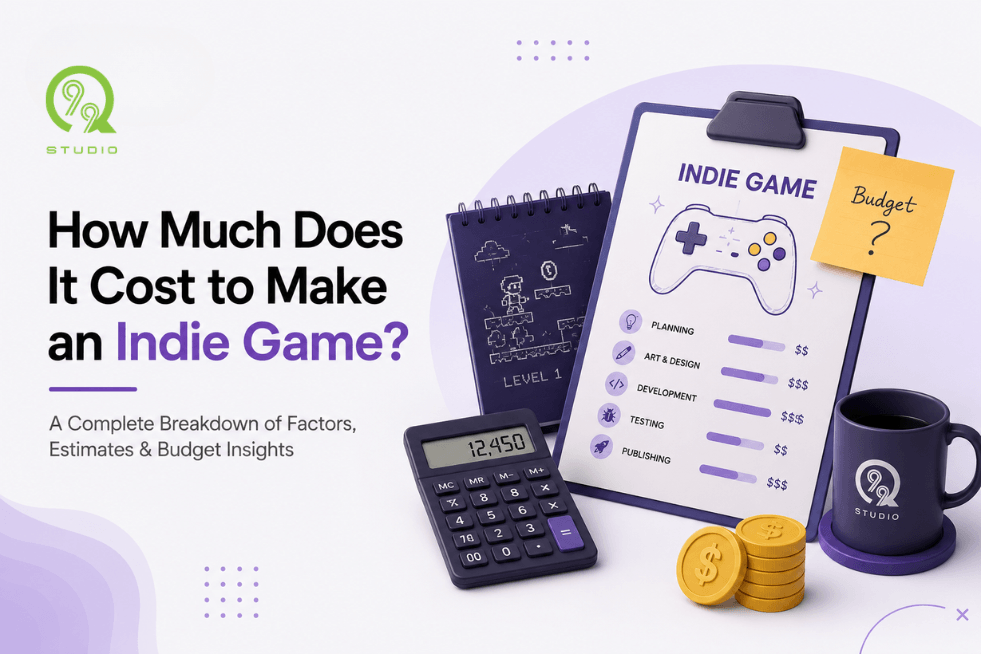
Building an indie game can cost anywhere from a few thousand dollars to several hundred thousand dollars, depending on your project's scope, team size, and development goals. If you're wondering how much does it cost to make an indie game, the answer depends on factors such as the game's complexity, art style, platform, and the experience of the development team.
In this guide, we'll break down the indie game development cost, explain the key factors that influence your budget, and explore the typical investment required for different types of indie games. Whether you're creating your first game or planning a commercial release, this guide will help you estimate your budget and make informed development decisions.
What Is an Indie Game?
An indie game, short for independent game, is a video game developed by an individual developer or a small team without the financial backing of a major game publisher. Indie games are known for their creative ideas, unique gameplay, and innovative storytelling, giving developers the freedom to experiment with concepts that larger studios may avoid.
Unlike AAA games, which are built by large teams with multi million dollar budgets, indie games are typically developed with limited resources and smaller teams. However, that doesn't mean they lack quality. Many successful titles such as Hollow Knight, Stardew Valley, and Celeste started as indie projects and went on to achieve worldwide success.
The indie game development cost can vary significantly depending on the project's scope, the size of the development team, the visual style, and the features you plan to include. Understanding these factors is the first step toward setting a realistic budget for your game.
How Much Does It Cost to Make an Indie Game?
The indie game development cost can range from $5,000 to over $2 million, depending on your project's scope, team size, production quality, and long-term goals. A solo developer building a small passion project can keep costs relatively low by using free tools and handling most of the work independently. In contrast, commercially successful indie games often require experienced designers, developers, artists, and testers to create a polished product that stands out in a competitive market.
The table below provides a general estimate of the investment required for different types of indie game projects.
| Project Scale | Estimated Cost | Typical Team Size | Development Timeline |
| Solo or Hobby Project | $5,000 to $15,000 | 1 Developer | 3 to 12 Months |
| Small Indie Game | $15,000 to $150,000 | 2 to 5 Members | 4 to 12 Months |
| Mid Scale Indie Game | $150,000 to $500,000 | 5 to 12 Members | 8 to 18 Months |
| Triple I Indie Game | $500,000 to $2 Million+ | 15+ Members | 12 to 36 Months |
These estimates should be used as a starting point rather than a fixed budget. The actual cost of your indie game will vary based on its genre, gameplay mechanics, visual style, target platforms, and the level of quality you want to achieve. Understanding how these costs are distributed throughout the development process will help you plan your budget more effectively, which we'll explore in the next section.
Indie Game Development Cost Breakdown
The total indie game development cost is spread across several key areas, from planning and production to launch and ongoing support. Understanding where your budget goes helps you prioritize spending, avoid unexpected expenses, and build a more realistic development plan.
| Cost Category | Estimated Share of Budget | What's Included |
| Game Design and Planning | 10% to 15% | Game concept, mechanics, documentation, technical planning |
| Art and Animation | 20% to 30% | Character design, environments, UI, visual effects, animations |
| Game Development | 30% to 40% | Gameplay programming, AI, backend systems, feature implementation |
| Audio Production | 5% to 10% | Sound effects, background music, voice overs |
| Quality Assurance | 10% to 15% | Bug testing, performance optimization, compatibility testing |
| Publishing and Launch | 2% to 5% | Store preparation, submission, launch assets |
| Marketing and Promotion | 10% to 20% | Trailers, social media campaigns, influencer outreach, community building |
| Post Launch Support | 5% to 10% | Updates, bug fixes, new content, ongoing maintenance |
While these percentages vary from one project to another, game development, art and animation, and marketing typically account for the largest share of an indie game's budget. Investing in these areas helps improve gameplay quality, player engagement, and the overall success of your launch.
Instead of treating every expense equally, it's important to allocate your budget based on your game's goals and target audience. For example, a story driven indie game may require a larger investment in art and audio, while an online multiplayer game is more likely to spend heavily on development and backend infrastructure.
What Factors Affect Indie Game Development Cost?
No two indie games are built the same, which is why development costs can vary significantly from one project to another. While the project scale gives you a general idea of the budget, the final cost depends on several important factors that influence the amount of time, expertise, and resources required to bring your game to life.
Game Scope
The overall scope of your game has the biggest impact on the budget. A short puzzle game with a few levels requires far less effort than a large adventure game with multiple environments, complex gameplay systems, and hours of content.
Art Style
Your choice of visual style directly affects development costs. Pixel art and minimalist graphics are generally more affordable than high quality 3D models, detailed environments, custom animations, and cinematic visual effects.
Game Features
Every additional feature increases the development effort. Multiplayer gameplay, character customization, cloud saves, achievements, leaderboards, and in game economies all require additional design, programming, and testing.
Platform Selection
Publishing on a single platform is usually more cost effective than launching on multiple platforms at the same time. Supporting PC, consoles, and mobile devices requires additional optimization, testing, and platform specific adjustments.
Development Team
The size and experience of your development team also influence the final budget. Solo developers can reduce upfront costs but often require more time to complete a project. Larger teams can deliver games faster while bringing specialized expertise in design, programming, art, and quality assurance.
Game Engine
The game engine you choose can affect both development time and long term costs. Unity and Unreal Engine are popular choices for indie games because they offer powerful tools, strong community support, and cross platform development capabilities.
Audio and Music
Professional sound effects, background music, and voice acting can significantly improve the player experience. While some indie developers use royalty free assets, custom audio production requires additional investment.
Post Launch Support
Launching your game is only the beginning. Regular updates, bug fixes, performance improvements, and new content help maintain player engagement and ensure your game continues to perform well after release.
Indie Game Development Cost by Genre
The genre of your indie game plays a major role in determining the overall development budget. Some genres require simple mechanics and limited content, while others demand advanced gameplay systems, larger teams, multiplayer functionality, or extensive world building. The table below provides estimated development costs for some of the most popular indie game genres.
| Game Genre | Estimated Cost | Development Timeline |
| Puzzle | $10,000 to $50,000 | 2 to 6 Months |
| Platformer | $20,000 to $80,000 | 3 to 8 Months |
| Roguelike | $30,000 to $120,000 | 4 to 10 Months |
| Metroidvania | $50,000 to $180,000 | 6 to 12 Months |
| Simulation | $60,000 to $200,000 | 6 to 12 Months |
| Strategy | $80,000 to $250,000 | 8 to 14 Months |
| Survival | $100,000 to $300,000 | 8 to 16 Months |
| RPG | $120,000 to $500,000+ | 10 to 18 Months |
These estimates are intended as a general guide and may vary depending on the game's art style, feature set, platform, and production quality. For example, a pixel art RPG with single player gameplay will typically cost much less than a fully voiced RPG with online multiplayer and custom three dimensional assets.
Choosing the right scope from the beginning is one of the best ways to keep your indie game development cost under control. Starting with a focused feature set and expanding the game through future updates can help reduce development risks while delivering a high quality experience to players.
Should You Build an Indie Game Yourself or Hire an Indie Game Development Company?
Once you have a rough budget in mind, the next decision is how you'll bring your game to life. Some indie developers choose to build everything themselves, while others partner with an experienced indie game development company to speed up development and reduce technical risks. The right approach depends on your budget, skills, timeline, and long-term goals.
| Factor | Build It Yourself | Hire an Indie Game Development Company |
| Upfront Investment | Lower cash investment | Higher initial investment |
| Development Time | Longer, especially for solo developers | Faster with a dedicated team |
| Technical Expertise | Depends on your skills | Access to experienced designers, developers, artists, and QA specialists |
| Creative Control | Complete control over every decision | Collaborative development with your input throughout the project |
| Scalability | Limited by available time and resources | Easily scale the team as the project grows |
| Project Risk | Higher risk of delays and technical challenges | Lower risk through established development processes |
| Long Term Cost | Lower upfront spending but significant personal time investment | Predictable project planning with professional delivery |
Building an indie game yourself can be a great option if you're learning game development, creating a prototype, or working on a passion project with a flexible timeline. It allows you to maintain complete creative control while keeping your initial expenses relatively low.
However, if your goal is to launch a commercial game, meet investor expectations, or release within a fixed timeline, working with an experienced indie game development company can be a smarter investment. You'll gain access to specialists across design, programming, art, animation, and quality assurance, helping you deliver a polished game while avoiding many of the challenges that solo developers face.
Ultimately, the best choice depends on your project's goals. If speed, quality, and long term scalability are priorities, partnering with the right development team can help you bring your vision to market with greater confidence.
Why Choose Q99 Studio for Indie Game Development?
Estimating the cost of an indie game is only the first step. Turning your idea into a successful product requires careful planning, the right technology, and an experienced development team that understands your vision.
At Q99 Studio, we offer end to end indie game development services, helping startups, entrepreneurs, and independent creators build high quality games that balance creativity, performance, and budget. From concept validation and game design to development, testing, and post launch support, we work closely with you at every stage of the journey.
If you're ready to bring your indie game idea to life, our team can help you define the right scope, prepare a realistic development roadmap, and deliver a game that aligns with your goals and budget. Get in touch with Q99 Studio to discuss your project and receive a tailored development estimate.
Frequently Asked Questions
Can one person make an indie game?
Yes. Many successful indie games have been developed by solo creators. However, developing a game alone requires skills in programming, game design, art, testing, and project management. While a solo project can reduce upfront costs, it usually takes longer to complete than working with a professional development team.
What is the average indie game development cost?
The average indie game development cost ranges from $15,000 to $150,000 for commercially developed projects. Larger indie games with advanced features, custom artwork, and bigger teams can cost significantly more depending on their scope and production quality.
How long does it take to develop an indie game?
Development time depends on the project's complexity. A simple indie game may take 3 to 6 months, while larger commercial projects often require 12 to 24 months or more.
Ready to Turn Your Indie Game Idea Into Reality?
Whether you're planning your first indie game or developing your next commercial title, Q99 Studio can help you transform your vision into a high quality gaming experience. Let's discuss your idea, define the right development roadmap, and provide a realistic project estimate based on your goals and budget.
Get a Free Project Estimate


 B - 433-442, Money Plant High Street, Near Ganesh Glory, Jagatpur Road, S.G. Highway, Ahmedabad - 382470.
 11006 Kirker Ln, Richmond, TX 77407, USA