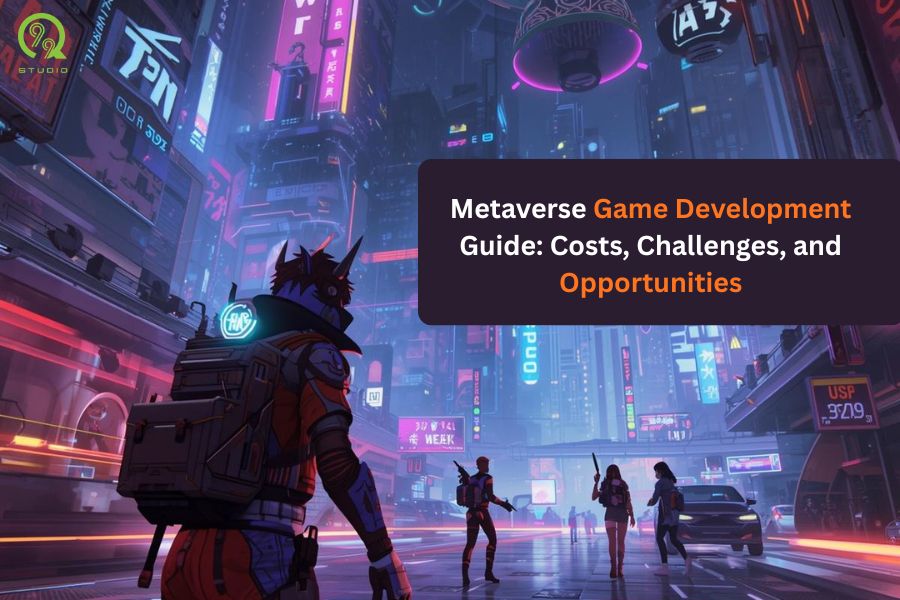
The idea of stepping into a digital world where users can play, interact, trade, and even build their own experiences is no longer futuristic. It’s already happening. Businesses across gaming, real estate, retail, and education are actively exploring metaverse platforms to engage users in a deeper, more immersive way.
But here’s the thing… building a metaverse game isn’t the same as building a regular mobile or web game. It’s more complex, more layered, and honestly, a lot more strategic. If you’re considering working with a Metaverse Game Development company or planning to hire metaverse developer talent, you need a clear understanding of what goes into it.
Let’s break it down in a practical way.
What Is Metaverse Game Development?
At its core, metaverse game development is about creating interactive, persistent virtual environments where users can do more than just play. They can socialize, trade assets, own digital items, and move across connected ecosystems.
Unlike traditional games:
- The world doesn’t reset after gameplay
- Users often own in-game assets (NFTs or digital goods)
- There’s a real economy involved
- Experiences are more open-ended
Think of it less like a “game level” and more like a living digital world.
Key Components of a Metaverse Game
Before jumping into cost or timelines, it helps to understand what you’re actually building.
- 3D Virtual Environment
This is the foundation. Realistic or stylized worlds where users interact. It includes landscapes, buildings, avatars, and objects.
- Blockchain Integration
If your game includes digital ownership (NFTs, tokens), blockchain becomes essential. It handles:
- Asset ownership
- Transactions
- Smart contracts
- Real-Time Interaction
Multiplayer functionality is not optional here. Users need to interact live, which requires strong backend infrastructure.
- AR/VR or Cross-Platform Access
Some metaverse games use VR headsets, while others work on mobile or desktop. Your platform choice directly affects cost and complexity.
- In-Game Economy
A working economy where users can buy, sell, or trade assets. This is where monetization comes in.
Metaverse Game Development Cost (What to Expect)
Let’s be honest… this is where most decisions are made.
The cost of metaverse game development varies heavily based on scope, features, and technology stack.
Basic Metaverse Game
- Simple environment
- Limited features
- Minimal blockchain integration
Mid-Level Game
- Custom 3D assets
- Multiplayer features
- Basic NFT integration
Advanced Metaverse Platform
- Large open world
- Full economy system
- Advanced avatars + VR support
Now, this isn’t fixed pricing. It depends on:
- Design complexity
- Number of features
- Platform (mobile, web, VR)
- Development team location
If you plan to hire metaverse developer resources individually, hourly rates can range between $25 to $100+ depending on experience and region.
Factors That Influence Development Cost
A lot of businesses underestimate this part.
- Game Design Complexity
A simple environment vs a fully interactive world… huge difference in effort.
- Technology Stack
Using Unity, Unreal Engine, or custom frameworks changes both cost and performance.
- Blockchain Choice
Ethereum, Polygon, Solana… each has different development and transaction costs.
- Asset Creation
High-quality 3D models, animations, and UI design can take a significant chunk of your budget.
- Scalability Requirements
If you expect thousands of users, backend infrastructure needs to be robust from day one.
Challenges in Metaverse Game Development
This is where reality hits.
- High Development Complexity
You’re combining game development, blockchain, real-time networking, and sometimes AR/VR. That’s multiple domains in one project.
- Performance Optimization
Rendering large 3D environments while maintaining smooth performance across devices is not easy.
- User Experience
A lot of metaverse platforms fail because they look great but feel confusing. Navigation, onboarding, and interaction design matter more than you think.
- Security Concerns
With digital assets and transactions involved, security becomes critical. Smart contract vulnerabilities can lead to real losses.
- Adoption and Engagement
Just because you build it doesn’t mean users will come. You need a strong engagement strategy.
Opportunities for Businesses
Now the interesting part… why companies are investing in this space.
- New Revenue Models
From selling digital assets to in-game transactions, metaverse platforms open multiple monetization channels.
- Brand Engagement
Users don’t just see your brand… they experience it. That’s a big shift.
- Virtual Commerce
Selling products in a virtual world is becoming more common than expected.
- Community Building
Metaverse games create loyal communities, not just users.
- Early-Mover Advantage
The space is still evolving. Getting in early can give your business a competitive edge.
Should You Hire a Metaverse Game Development Company?
Short answer… yes, in most cases.
Building a metaverse game requires a mix of skills:
- Game design
- 3D modeling
- Blockchain development
- Backend engineering
Managing all of this in-house can be overwhelming unless you already have a specialized team.
Working with a professional Metaverse Game Development company gives you:
- Faster development cycles
- Access to experienced developers
- Better project structure
- Reduced technical risks
That said, if you have an internal tech team, you can also hire metaverse developer specialists to fill specific gaps.
How to Choose the Right Development Partner
Not all companies are the same. And this decision matters more than most.
Here’s what you should actually look for:
Portfolio
Have they built anything similar? Not just apps… actual 3D or gaming environments.
Tech Expertise
Do they understand both gaming engines and blockchain?
Scalability Approach
Ask how they plan to handle user growth.
Communication
This gets ignored a lot. But clear communication can save months of rework.
Post-Launch Support
Metaverse platforms need continuous updates. Make sure they offer it.
Final Thoughts
Metaverse game development is exciting, no doubt. But it’s not something you jump into without a clear plan.
Costs can scale quickly. Challenges are real. But the opportunities… they’re just as big.
If you approach it strategically, start with a focused idea, and work with the right Metaverse Game Development company, you can build something that doesn’t just exist… but actually engages users and drives business value.
And if you’re still unsure, start small. Validate your concept. Then scale. That’s how most successful metaverse projects actually begin.



 B - 433-442, Money Plant High Street, Near Ganesh Glory, Jagatpur Road, S.G. Highway, Ahmedabad - 382470.
 11006 Kirker Ln, Richmond, TX 77407, USA